You tell me you have no energy. No drive. No spark for the things that used to light you up, including sex.
I hear it almost every day. The willpower is gone, the desire is gone, and somewhere underneath the exhaustion is the quiet fear that this is just how it is now.
It is not.
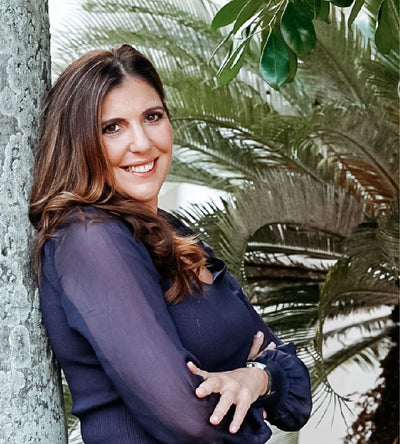
I sat down with Connie Keene, a Reiki master, published author, and energy teacher I met at a walking meditation group in Dallas, to talk about something most doctors will not touch. Whether desire is over after menopause, after a long marriage, after losing a spouse. And what it actually takes to feel alive in your body again.
A quick note before you read. Connie works in energy medicine, Reiki, chakras, and a method she calls “true for you” testing. That world is hers, and I let her teach it in her own words throughout this conversation. I bring the physician’s lens. Take what resonates with you, leave what does not, and as always, talk to your own doctor about anything related to your health. Nothing here is medical advice or a claim about treating any condition.
Table of Contents
→ Do Women Really Have Sex After Menopause
→ Marilyn at 74: Why I Tell Her Story
→ How Connie Found Energy Work After a Near-Death Experience
→ What Reiki Actually Is, in Plain Language
→ Where Your Body Stores Stuck Emotion
→ Intimacy After Losing a Spouse
→ The Root Chakra and Your Vital Energy
→ How to Wake Up Sexual Energy at Any Age
→ Don’t Guess, Test: Muscle Energy Testing
→ FAQ: Energy, Desire, and Intimacy After Menopause
Timestamps
- 00:00 - Introduction: Reigniting the Fire Within & Recharging Your Energy
- 02:10 - A Younger Doctor Asks: Do Women Really Have Sex After Menopause?
- 03:45 - Marilyn, 74, Married 50+ Years: More Intimacy Than Ever
- 06:20 - Connie’s Near-Death Experience Over the Pacific & Discovering Reiki
- 14:30 - What Reiki Is & How to Practice It on Yourself
- 18:15 - How Emotions Are Stored in the Body: Organs & the Auric Field
- 24:40 - Caregiving, Stage 4 Cancer & Intimacy at the End of Life
- 35:10 - The Root Chakra & Awakening Juicy, Vital Energy
- 41:00 - Self-Care, Skin-to-Skin Connection & Grounding Barefoot in Nature
- 48:30 - Don’t Guess, Test: A Live Muscle Energy Testing Demonstration
- 58:00 - The Hawkins Map of Consciousness & How to Raise Your Frequency
Do Women Really Have Sex After Menopause
Right before I recorded this episode, a doctor in his late thirties interviewed me for a medical podcast. We were talking about vaginal and bladder health well past menopause, and he asked me, in all seriousness, whether people who have been married a long time still have sex. Or whether they just become roommates.
Not my patients.
That assumption, that desire has an expiration date, is everywhere. It shows up in exam rooms, in marriages, and in the stories women tell themselves about what is still available to them. I wanted to take it apart on this episode, because the women I work with are writing a very different story.
Marilyn at 74: Why I Tell Her Story
Marilyn came into my office not long after that interview. She is 74 and has been married for over 50 years. She told me that this past year she and her husband have had more intimacy and more pleasure than at any other point in their marriage, and that it has brought them closer than they have ever been.
That is what is possible. Not for everyone, not on a timeline, but possible. And it is worth holding onto when the world keeps telling you the door is closed.
"More intimacy, more pleasure, and it’s been indescribable as to how that’s moved them in their relationship, more close and more intimate. And that’s at 74 years old."
How Connie Found Energy Work After a Near-Death Experience
Connie did not set out to become an energy teacher. In 1994, she boarded a plane over the Pacific with what she thought was bronchitis. It was pneumonia. At 30,000 feet her lungs filled with fluid and she could not breathe, taking tiny sips of air in the dark so she would not frighten the sleeping passengers, thinking of her two small children at home.
She describes an experience she cannot fully explain, a presence she recognized as a friend who had passed two months before, staying with her until the plane landed in Singapore. She spent a week in the hospital there. Five rounds of antibiotics kept her alive, and as she puts it, the medical model saved her but could not restore her wellness. That gap is what sent her looking for something else, and she found Reiki.
"The medical model kept me alive and I am so grateful, and it could not restore wellness. So I started exploring energy."
What Reiki Actually Is, in Plain Language
Connie describes Reiki as becoming a channel for energy. A trained practitioner is attuned so that energy moves through them and out through their hands to the person receiving it. Her own training was unusual and slow, an apprenticeship over more than a year before she was initiated to teach, rather than a weekend course.
She also makes the point that you do not need a master to start. You can place your own hands on your body with intention and pay attention to what you feel. When she began, her assignment was a twenty minute self session every day for twenty one days, and that daily practice is what she still recommends. The way she sees it, you are an electromagnetic being, and your own attention is the practice.
Where Your Body Stores Stuck Emotion
This is where the energy world and what I see clinically start to rhyme. In Connie’s framework, and in traditions like traditional Chinese medicine and Ayurveda, certain emotions get associated with certain organs. Grief in the lungs. Anger in the liver. Fear in the kidneys.
Connie expands on that. In her view, a stuck emotion can live anywhere, in any cell, tissue, or layer of what she calls the auric field, often settling wherever the body was weakest at the moment of a trauma. While we were recording, she felt grief move between her heart and her throat and worked with it on camera, releasing some of the compounded loss from losing her mother, her father, and her husband within fourteen months of each other.
I am careful here. I am a physician, not an energy healer, and I am not telling you energy work treats disease. What I will say is that I have watched stuck emotion sit heavy in women for years, and I have seen what changes in them when it finally has somewhere to go.
Intimacy After Losing a Spouse
Connie’s husband Jim died of stage 4 prostate cancer after two years of caregiving. She walked through that with extraordinary honesty, including what happened to their intimacy when he lost sexual function during treatment.
Their therapist suggested they try other things. What they found, instead, was that the deepest part of their sexual energy was skin to skin. Falling asleep in each other’s arms fed that part of them more than anything else. They cleared the air completely, said everything there was to say, and reached each other at what Connie calls a soul level, all the way to his last breath.
I asked her this directly because so many women carry exactly this. The loss of a partner, or the slow fade into a roommate marriage, and a sexual self that feels switched off. Her answer matters whether or not you share her spiritual lens.
"We found that the deepest part of that sexual energy for us was skin to skin. For us to fall asleep in each other’s arms, that fed us more than anything else."
The Root Chakra and Your Vital Energy
For Connie, the root chakra is the base of everything, governing the whole body and running all the way down through the legs into the ground. When women describe being “shut down from the waist down,” she does not only mean sexually. She means the loss of that juicy, red, vital energy that makes you feel alive in your own pelvis.
When all of this was happening in her life, she lived on the ocean and walked the beach barefoot at sunrise, pulling that grounding energy up into her body every morning. She also channeled an enormous amount of creative and sexual energy into building her company during the same years she was losing the three people closest to her.
How to Wake Up Sexual Energy at Any Age
Connie does not believe there is an age where this ends. She describes her own parents as sexually active into their late eighties. Here is what she actually does and recommends, in her words and framework.
Get outside, ideally barefoot
She believes the root chakra extends all the way down through your legs, and that even the intention to engage with that earth energy is enough to start. Time in nature, bare feet on the ground, sunlight in the morning.
Honor yourself with attention and sensation
For Connie that sometimes meant slipping into bamboo sheets with no clothes on, not for orgasm but for the feeling of her own skin, a way of giving herself care and attention. Self stimulation, she says, is a beautiful way to acknowledge yourself, and yes, she is a fan of “an orgasm a day.”
Fall asleep sending energy to your own body
She rests her hands at the crease of her hips with the intention of sending appreciation to her root chakra, then moves up through the centers as she wakes through the night. As a physician I would add that focusing attention on the pelvis, picturing warmth and light expanding there, is a calming practice that costs nothing and asks nothing of you but a few quiet minutes.
I also brought the science where it exists. Research on heart rate variability shows that time in nature increases coherence in the body, so there is measurable ground under the idea that getting outside changes how you feel.
Don’t Guess, Test: Muscle Energy Testing
This was one of my favorite parts, and it is where Connie’s “true for you” testing comes in. The idea is that your body has its own intelligence and can give you a yes or a no through subtle movement, your body leaning toward what serves it and away from what does not.
Connie demonstrated it live with her own supplements, her progesterone, even a Snickers bar, calling out each item and reading her body’s response. She makes a point of clearing the strong wanting first, the part of you that loves the candy, so the test reflects the body rather than the craving.
I want to be clear about how I use this. I am not telling you to muscle test your medications or set your own doses from it. In my practice, intuition and energetic awareness sit alongside lab work, genetics, and clinical judgment, never instead of them. Where it has served me is as one more way to stay in tune with a patient’s body, and to encourage women to stop overriding their own instincts. Start low, go slow, and pay attention to what your body is already telling you.
"Pay attention to your supplements, pay attention to your choices. Oftentimes you have your intuition, and then you reason away from it."
The Map of Consciousness
Connie closed with the Hawkins map of consciousness, a scale of emotional frequencies from shame near the bottom up through courage, acceptance, love, joy, and peace. Her life’s mission, as she puts it, is raising the collective consciousness toward peaceful coexistence, and she believes the higher our own frequency, the more we affect the people around us, our children included.
You can take the spiritual framing or leave it. What I keep coming back to is the through line underneath all of it. The women who are stuck in anger, regret, shame, and grief are the ones I watch struggle to heal, and the ones who find their way to compassion, gratitude, and self-kindness are the ones who change. I have lived in the low, dark places myself. Wherever you are right now, there is a way forward, one step at a time.
FAQ:
Q: Do women still have sex after menopause?
A: Yes. Many women remain sexually active and report deep intimacy well into their seventies and beyond. On this episode, Dr. Anna shares the story of a 74-year-old patient, married over 50 years, experiencing more pleasure and closeness than ever before. Desire after menopause looks different for everyone, and changes in comfort or desire are worth discussing with your own doctor.
Q: Why do I have no energy or desire during perimenopause and menopause?
A: Low energy, low drive, and reduced desire are among the most common concerns women raise with Dr. Anna during midlife. Many factors can contribute, including hormonal shifts, sleep, stress, and emotional load. A personalized evaluation with a qualified provider is the best way to understand what is happening in your body.
Q: What is Reiki and can I do it on myself?
A: Reiki is an energy practice where a practitioner acts as a channel, directing energy through their hands to support relaxation. Guest Connie Keene explains that you do not need formal training to begin a simple self practice. She suggests placing your hands on your body with intention for about twenty minutes a day. Reiki is a complementary practice and is not a substitute for medical care.
Q: What is muscle energy testing or “true for you” testing?
A: It is a method guest Connie Keene uses where the body’s subtle movements are read as a yes or no response to a question, food, or supplement. It is part of an energy-medicine framework, not a clinical diagnostic tool. Dr. Anna notes she uses intuitive awareness alongside lab work and medical judgment, never as a replacement for it, and does not recommend self-dosing medications based on it.
Q: How can I reconnect with intimacy after losing a spouse?
A: On this episode, Connie Keene shares that the deepest intimacy with her late husband became skin to skin closeness rather than intercourse, and that honoring yourself through attention, touch, and sensation can keep that part of you alive. Grief is personal, and support from a counselor or therapist can help.
Q: Is there an age when it is too late to feel sexual energy again?
A: Connie Keene does not believe so, and describes people remaining vital and sexually engaged into their eighties. Her suggestions include getting outside, grounding through bare feet, and giving yourself attention and care.
Q: How does spending time in nature affect aging and wellbeing?
A: Research on heart rate variability shows that time in nature can increase coherence in the body, a measure linked to how the nervous system is functioning. On this episode, Connie recommends getting outside and grounding through bare feet as a daily practice, and Dr. Anna points to the science supporting time in nature as a way to shift how you feel.
Resources Mentioned
The Quantum Now - Book by Connie Kean
Quantum Energy Infusion — Connie’s online energy program
The map of consciousness — Dr. David Hawkins