Key Topics & Timestamps
00:02 – Reimagining breast health: removing the estrogen black box warning
03:00 – Dr. Jenn Simmons’ personal breast cancer journey
08:30 – Functional medicine and root cause oncology
12:45 – Why conventional medicine ignores “why”
21:45 – The Women’s Health Initiative and hormone fear
26:40 – Mammogram myths and survival data
32:30 – Radiation exposure and cancer risk
36:00 – The ARIA tears test explained
41:00 – QT imaging vs mammograms
46:50 – Hormones after breast cancer
53:00 – Progesterone vs progestins
1:02:00 – Birth control pills and breast cancer risk
Are Mammograms Safe?
This is a question I’ve been asked thousands of times in my career.
As a board-certified OB/GYN trained in conventional medicine, I was taught — without question — that mammograms save lives. That was the dogma. That was the standard. That was the guideline.
But over the years, as I stepped deeper into functional and integrative medicine, I started asking harder questions.
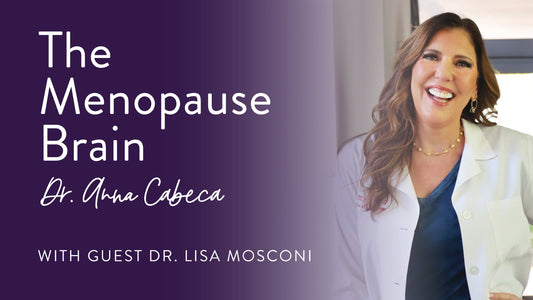
And when I recently sat down with my colleague and friend, Jenn Simmons, a former top breast surgeon turned integrative oncologist, we had one of the most important conversations I’ve ever had publicly about breast health.
Because the real question isn’t just Are mammograms safe?
It’s:
What does the research actually say?
Are we improving survival?
Are we overdiagnosing?
Are there safer alternatives?
And what role do hormones truly play in breast cancer?
This conversation may challenge what you’ve always believed.
From Breast Surgeon to Breast Health Revolutionary
Dr. Simmons’ story is powerful. She grew up in a family filled with breast cancer. She became a breast surgeon — the first fellowship-trained breast surgeon in Philadelphia — and spent years practicing at the highest conventional level.
Then she was diagnosed with cancer herself.
That diagnosis forced her to ask the question most patients are never encouraged to ask:
Why did this happen?
Not “How do we cut it out?”
Not “Which drug?”
But “What caused this in the first place?”
That question led her into functional medicine, where she trained through the Institute for Functional Medicine and began investigating root causes — inflammation, toxic burden, metabolic dysfunction, stress, mold exposure, sleep deprivation, and more.
And that same spirit of inquiry led her to revisit mammograms.
What We Were Taught About Mammograms
In medical school and residency, we were told:
Mammograms save lives.
But when you actually look at the foundational data, it becomes far more nuanced.
Dr. Simmons shared that the original large screening trials demonstrated a slight reduction in breast cancer deaths — but no difference in overall cancer mortality.
That means the same number of women died of cancer in both groups.
The difference? More cancers were diagnosed in the screened group.
Which raises the next question:
Are we detecting life-threatening cancers earlier — or are we diagnosing cancers that would never have caused harm?
Overdiagnosis: The Hidden Risk
Overdiagnosis means identifying cancers that would not have progressed or affected lifespan.
When overdiagnosis happens, women undergo:
Surgery
Radiation
Chemotherapy
Hormone suppression
All for a cancer that may never have impacted their life.
And these treatments are not benign.
They increase risks of:
Heart disease
Bone loss
Cognitive decline
Depression and anxiety
Metabolic dysfunction
This is why the question “Are mammograms safe?” cannot be answered in isolation. We must ask:
Are we helping more than we’re harming?
Do Mammograms Cause Cancer?
Let’s talk about radiation.
Radiation is classified as a carcinogen.
In every other context, radiologists will confirm that radiation exposure increases cancer risk. Yet when discussing mammograms, we’re told the radiation dose is “minimal.”
Minimal does not mean zero.
And repeated exposure over decades matters.
We know from Hodgkin’s lymphoma survivors treated with chest radiation that their breast cancer risk increases dramatically. So logically, we must at least consider cumulative exposure.
Is a single mammogram catastrophic? Likely not.
But annual radiation exposure for 30–40 years?
That deserves an honest conversation.
Are There Alternatives to Mammograms?
This is where our conversation became especially hopeful.
Dr. Simmons discussed emerging screening options that do not involve radiation.
1. The ARIA Tears Test
The ARIA test analyzes inflammatory proteins in tear fluid — a five-minute, non-invasive test performed at home.
It detects inflammatory markers associated with breast cancer risk.
If negative, screening can be deferred.
If positive, further imaging is warranted — but the key is early detection of inflammation, not just tumor.
That’s powerful.
2. QT Imaging
Dr. Simmons founded Perfection Imaging, offering QT imaging — a 3D ultrasound-based technology using sound waves transmitted through a water bath.
No compression.
No radiation.
No gadolinium contrast.
For women concerned about radiation exposure, this represents a significant innovation.
3. Ultrasound
Breast ultrasound, especially in dense breasts, can be an effective adjunct without radiation.
Hormones: The Elephant in the Room
We cannot discuss mammograms without discussing hormones.
For over 20 years, fear around estrogen dominated women’s healthcare, largely due to the Women's Health Initiative.
That study led to a black box warning claiming estrogen causes breast cancer.
That warning has since been removed.
But the fear remains.
Dr. Simmons powerfully stated:
Estrogen is the innocent bystander.
Inflammation increases aromatase activity, which increases estrogen locally. Estrogen is often the result — not the root cause.
When inflammation is reduced, the local estrogen excess resolves.
Is Hormone Replacement Therapy Safe After Breast Cancer?
This is one of the most Googled questions today.
The answer is not simplistic.
We must distinguish between:
Having active cancer
Having had cancer
For women who have had cancer, under careful monitoring and integrative care, bioidentical hormones may be appropriate.
The key difference?
Bioidentical progesterone versus synthetic progestins.
Progesterone vs Progestins
This distinction is critical.
Synthetic progestins (found in many birth control pills and older HRT formulations) have been linked to increased breast cancer risk.
Bioidentical progesterone behaves differently in the body.
It:
Balances estrogen
Supports cellular regulation
Has anti-proliferative effects
In fact, synthetic progestins appear to drive much of the increased breast cancer risk seen in older hormone studies.
This also raises concerns about long-term use of progestin-containing birth control, particularly in young women whose breast tissue is still developing.
Birth Control Pills and Breast Cancer Risk
Large epidemiological studies — including a Danish study of 1.8 million women — show a linear relationship between duration of hormonal contraceptive use (especially those containing progestins) and breast cancer risk.
The longer the exposure, the higher the risk.
That risk appears to decline after discontinuation but persists for several years.
This is not fear-based medicine.
This is informed consent.
Women deserve transparency.
Root Cause Medicine: The Bigger Picture
The most powerful part of our discussion wasn’t about mammograms.
It was about health optimization.
Because even the best screening tool does not prevent cancer.
Prevention requires:
Anti-inflammatory nutrition
Blood sugar regulation
Muscle building
Quality sleep
Detoxification support
Mold remediation
Emotional trauma resolution
Reducing endocrine-disrupting toxins
Hormones, as Dr. Simmons beautifully said, are the bow on top of the box.
But the box must be built first.
Why This Conversation Matters Now
We are in a transitional era in women’s medicine.
The black box warning on estrogen has been removed.
Functional medicine is becoming mainstream.
Women are demanding data.
And we must move from fear-based protocols to informed, individualized decisions.
That includes mammograms.
That includes hormones.
That includes birth control.
We cannot practice 1980s medicine in 2025.
So… Are Mammograms Safe?
Here is my honest answer as a physician:
Mammograms are not evil.
But they are not risk-free.
They involve radiation.
They increase overdiagnosis.
They can lead to overtreatment.
For some women, they may still be appropriate.
For others, safer alternatives may exist.
The most important thing is not blind compliance.
It is an informed choice.
And that is why this podcast episode is so important.
Listen to the Full Conversation
YouTube | Apple Podcast | Spotify
This is one of the boldest and most eye-opening discussions we’ve had.
I invite you to listen to the full episode and share it with the women you love.
Q&A:
Q: Are mammograms safe?
They involve low-dose radiation and can lead to overdiagnosis. Risk-benefit varies by individual.
Q: Do mammograms cause cancer?
Radiation is a known carcinogen. While individual risk is small, cumulative exposure matters.
Q: What are alternatives to mammograms?
QT imaging, breast ultrasound, and the ARIA tears test are emerging options without radiation.
Q: Is hormone replacement therapy safe after breast cancer?
In some cases, under expert supervision and with bioidentical hormones, it may be appropriate.
Q: Are birth control pills linked to breast cancer?
Long-term use of progestin-containing contraceptives shows a small but measurable increase in risk.
Your health is your right.
Ask questions.
Demand data.
Make informed choices.
And most importantly — stay breast empowered.
Dr. Anna Cabeca