If you've typed something like "is HRT safe?" or "why is hormone replacement therapy bad?" into Google at midnight while sweating through your sheets, it’s time we had a real talk about hormone therapy for menopause symptoms. Because there is a lot of confusion out there.
Doctors have been afraid to prescribe it for decades. And now every social media influencer is telling you that you should be on hormone therapy. It makes sense that everyone is confused.
The whole conversation has been tangled up in fear, outdated research, and one-size-fits-all thinking for far too long. As a triple-board-certified gynecologist who has worked with tens of thousands of women through perimenopause and beyond, I want to give you something different: straight answers, real context, and a balanced view that actually helps you make decisions for your body.
Let’s work through your options.

What is hormone therapy for menopause?
Hormone therapy for menopause is exactly what it sounds like: supplementing the hormones your body is producing less of as you approach and move through menopause. The main hormones involved are estrogen, progesterone, and often testosterone and DHEA, all of which decline significantly during this transition.
There are different types, different delivery methods (pills, patches, creams, gels, suppositories), and different combinations depending on your individual needs and whether you still have a uterus. That last point matters because women who have not had a hysterectomy typically need both estrogen and progesterone together, while estrogen alone might be appropriate for those who have.
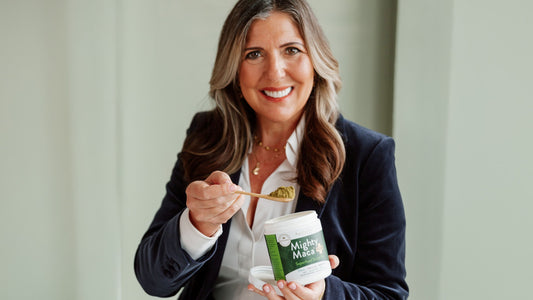
Hormone therapy is not a one-size-fits-all prescription, and many women benefit from foundational lifestyle and adaptogenic support alongside it — which is exactly why I developed Mighty Maca Plus as a daily ritual for calm energy and hormonal resilience. When done properly, it is a highly individualized treatment that is tailored to your specific hormone levels, symptoms, health history, and goals.
That nuance is often lost in the broader conversation, and it is one of the reasons so many women feel confused about whether HRT is right for them.
How does HRT help with menopause symptoms?
When your hormones decline, virtually every system in your body feels it. Estrogen alone has receptors in your brain, bones, heart, skin, gut, and vaginal tissue. So when levels drop, the ripple effects are wide.
Hormone therapy works by restoring enough hormonal support so that your body can function more comfortably. For many women, this means hot flashes and night sweats become manageable or disappear entirely. Sleep improves. Brain fog lifts. Mood stabilizes — and for women who have been experiencing what many call menopause rage treatment-worthy episodes of intense anger and irritability, this hormonal support can be genuinely life-changing. Vaginal dryness and painful intercourse resolve. Bone density is protected. Cardiovascular risk factors improve. (1)
One of my patients, a 52-year-old teacher, told me she had spent two years thinking she was "just getting old or going crazy" before we optimized her hormones. Within six weeks, she said she felt like herself again for the first time in years. That said, not everyone responds the same way. And not everyone has access to medical care that includes an “HRT-friendly” doctor.
What is the HRT critical timing theory?
The critical timing theory, also called the "window of opportunity," is one of the most important current concepts in menopause medicine. It refers to the idea that the timing of when you start hormone therapy matters enormously for the benefits you receive and the risks you carry.
Here is the basic principle. When you initiate hormone therapy within ten years of your final menstrual period, or before age 60, your cardiovascular system, brain, and bone tissue are still in a state where estrogen can be protective. The receptors are responsive. The tissue is healthy enough to benefit. Starting hormone therapy during this window is associated with reduced risk of heart disease, better cognitive outcomes, and stronger bone protection. (2, 3)
When hormone therapy is started much later, in women who are already 70 or 75 with established cardiovascular changes, the picture is different. Some of the risks that made headlines from the Women's Health Initiative study were actually a reflection of this timing problem. Many of those women were well past the window. (4)
This is why I encourage women not to wait until their symptoms are unbearable before having the conversation. The earlier you address the hormonal transition, ideally in perimenopause, the more protective potential hormone therapy carries.
However, if you are older and past your timing window, you may decide that the quality of life HRT affords is worth the risk, and that’s your decision to make with your physician.
When is hormone therapy recommended?
Hormone therapy is most commonly recommended when menopause symptoms are significantly affecting your quality of life. This includes moderate to severe hot flashes, disruptive night sweats, sleep disturbances, mood changes, cognitive symptoms, and genitourinary symptoms like vaginal dryness, recurrent UTIs, and painful sex.
It is also considered for women at elevated risk of osteoporosis, and increasingly, research is pointing to its protective role in brain health and cardiovascular health when started early in the menopause transition. (2, 3) This is what researchers call the "timing hypothesis" or the "window of opportunity," I discussed above, and it suggests that starting hormone therapy within ten years of menopause or before age 60 carries a meaningfully different risk-benefit profile than starting it later.
The key is that the decision should always be individualized. Your symptoms, your lab work, your personal and family health history, and your goals all matter. A blanket "yes" or "no" to HRT without that context is not good medicine.
When is hormone therapy commonly used beyond symptom relief?
Beyond managing the classic menopause symptoms, hormone therapy for women after menopause is increasingly being discussed in the context of longevity and disease prevention.
Estrogen therapy has been shown to support bone density and reduce fracture risk. (5) It may also reduce the risk of developing type 2 diabetes. (6)
Emerging research is also looking at the relationship between estrogen, progesterone, and cognitive health, particularly around Alzheimer's disease risk. Given that two-thirds of people with Alzheimer's are women, this is a conversation we cannot afford to keep ignoring. (7)
DHEA is another hormone worth understanding. It peaks in your 20s and declines steadily from there, affecting everything from energy and immune function to vaginal tissue health and sexual wellbeing. Topical DHEA, including through a product like Julva® that I developed specifically for vulvar and vaginal health, can make a significant difference in tissue quality, moisture, and comfort without the systemic effects of oral hormones. (8)

What are the risks of HRT?
Honesty matters here, so let me give you a balanced answer rather than either minimizing or catastrophizing.
The risks of HRT depend enormously on the type of hormones used, the delivery method, the timing of initiation, the dose, your individual health history, and how well the therapy is monitored. There is no single risk profile that applies to every woman on every form of hormone therapy.
With that context, here is what the current evidence tells us.
Oral synthetic progestins, particularly the type used in older combined HRT formulations, carry a small but real increased risk of breast cancer with long-term use. (4, 9)
Bioidentical progesterone appears to carry a more favorable profile. (10)
Oral estrogen carries some increased risk of blood clots and stroke, particularly in women who smoke or have underlying clotting disorders. (4) Transdermal estrogen does not appear to carry the same clotting risk. (11)
For most healthy women who initiate hormone therapy in early menopause, the evidence suggests the benefits outweigh the risks. (12) The absolute risk increases, where they exist, are small.
What does genuinely increase risk is using HRT without appropriate monitoring, without individualizing the type and dose, and without regular follow-up. Hormone therapy done well is very different from hormone therapy done carelessly. Work with someone who will monitor your levels, assess your response, and adjust over time.
What is bioidentical hormone therapy for menopause?
Bioidentical hormones are hormones that are molecularly identical to the ones your body produces naturally. They are derived from plant sources (typically wild yam or soy) and processed into forms that match your body's own estrogen, progesterone, and testosterone.
This is different from synthetic hormones, like the progestins used in some conventional HRT formulations, which are similar to but not identical to your body's natural progesterone. The distinction matters because different forms behave differently in the body and carry different risk profiles. For example, natural progesterone has been shown to have a more favorable cardiovascular and breast tissue profile than synthetic progestins. (10)
Bioidentical hormones can be prescribed through compounding pharmacies, which allows for fully customized dosing and delivery methods based on your individual lab work and symptoms.
They are also available in some FDA-approved formulations. Working with a physician who understands the difference and can monitor your levels appropriately is essential to doing this well.
My Balance Cream is a topical bioidentical progesterone cream I created for women who want to support their progesterone levels, particularly in perimenopause, when progesterone is the first hormone to drop significantly. Many of my patients use it as a starting point or a gentler alternative to prescription hormones.

Can estradiol patches cause your blood pressure to rise?
This is a really important question, and the answer is nuanced in a way that most people do not hear.
Oral estrogen, taken in pill form, is processed through the liver before entering the bloodstream. This liver first-pass effect can stimulate the production of certain proteins that raise blood pressure in some women. So yes, oral estrogen has a documented association with blood pressure increases in women who are already predisposed. (13)
Transdermal estrogen, meaning patches, gels, or creams applied to the skin, bypasses the liver entirely. It enters the bloodstream directly and does not trigger the same liver response. The current evidence suggests that transdermal estradiol does not raise blood pressure and may actually be the safer option for women with hypertension or cardiovascular risk factors. (11)
This is one of the reasons I tend to favor transdermal delivery methods in my practice. It is also a reason why the delivery method of your HRT matters just as much as the hormone itself. If you have been told you cannot use estrogen because of blood pressure concerns, it is worth asking specifically whether that concern applies to transdermal forms.
Does HRT work if you are allergic to progesterone?
True allergies to bioidentical progesterone are rare but they do exist, and this is a situation that requires careful navigation with a knowledgeable provider.
First, it is worth clarifying what the allergy is actually to. Some women who react to progesterone supplements are actually reacting to the peanut oil or other carriers used in certain oral progesterone capsules like Prometrium, not to the progesterone itself. Switching to a different delivery method or a compounded formulation without the offending carrier can sometimes resolve the issue entirely.
For women who have a genuine sensitivity to progesterone itself, there are a few paths forward. Vaginal progesterone often causes fewer systemic reactions than oral forms because the absorption pattern is different. Some women tolerate progesterone-containing IUDs because the hormone acts locally with minimal systemic levels.
For women who truly cannot use any form of progesterone and who still have a uterus, systemic estrogen alone is not typically recommended because of endometrial risk. In these cases, some physicians explore alternatives like bazedoxifene, which is a selective estrogen receptor modulator that can be paired with estrogen and protects the uterine lining without using progesterone. (14)
What is the deal with testosterone therapy for women?
Testosterone is the hormone that gets the least airtime in the menopause conversation, and yet its decline affects women profoundly. Libido is the obvious one, but low testosterone in women is also associated with fatigue, reduced motivation, muscle loss, brain fog, and decreased sense of well-being.
Women produce testosterone in their ovaries and adrenal glands, and levels begin declining in the late 30s and early 40s, well before menopause. By the time a woman reaches postmenopause, her testosterone levels may be a teeny-tiny fraction of what they were in her prime.
Testosterone therapy for women is currently not FDA-approved in the United States for any indication, which means it is prescribed off-label. (15) This has created an access and awareness gap, because without an approved product, many conventional physicians simply do not offer it. Compounding pharmacies can prepare testosterone creams or gels in doses appropriate for women, which are significantly lower than male doses.
The evidence for testosterone in women is growing. Studies support its role in improving libido, energy, mood, and muscle maintenance. (15) Applied topically to the vulvar area, it may also support tissue health alongside estrogen and DHEA.
Testosterone for menopause is often administered via a pellet that is implanted into the fat on your buttocks or thigh. This can be painful and difficult to adjust dosages.
Why do some people say hormone replacement therapy is bad?
In 2002, the Women's Health Initiative study made headlines by suggesting that HRT increased the risk of breast cancer, heart disease, and stroke. (4) Women stopped their prescriptions overnight. Doctors stopped prescribing.
What was lost in the panic was the nuance. The WHI study used synthetic progestins, not bioidentical progesterone. It used oral conjugated equine estrogen, not transdermal or bioidentical estrogen. The women in the study were older, averaging 63 years old, well past the window of opportunity. (4) Many already had underlying cardiovascular disease.
Subsequent reanalysis of the data, along with decades of additional research, has painted a much more complicated and in many ways more reassuring picture. (12) For healthy women in early menopause, the risks of HRT as broadly portrayed simply do not hold up. That does not mean HRT is risk-free for everyone, but the blanket "HRT is dangerous" narrative is not supported by current evidence.
The problem is that the fear stuck, and many women are still making decisions based on a 20-year-old headline.
In 2025, the FDA officially made plans to remove the black-box warning on HRT.
Who is not a good candidate for hormone therapy?
Hormone therapy is not appropriate for everyone, and that is important to say clearly. Women with a personal history of certain hormone-sensitive cancers (particularly estrogen-receptor positive breast cancer), active or recent blood clots, stroke, or uncontrolled cardiovascular disease are generally not considered candidates for systemic HRT. (1)
If you fall into this category, please know that you are not without options. You are just working with a different toolkit.
Natural hormone therapy for menopause, meaning lifestyle-based and supplement-supported approaches, can make a meaningful difference. This is actually where I often start with all of my patients, regardless of whether they go on to use HRT, because the foundation matters enormously. I always say that you need more than hormones to fix your hormones!
Dietary changes, stress management, targeted sleep support, pelvic floor exercise, and specific supplements like magnesium, vitamin D, probiotics, and omega-3 fatty acids can also significantly support your body without hormones. It takes more intentionality, but it is absolutely possible to feel dramatically better through this approach.
Mighty Maca Plus is a superfood blend I developed that supports hormone balance, alkalinity, and adrenal health through nutrition. It contains maca root, which has published research supporting its role in reducing hot flashes and improving mood in perimenopausal women. (16)
For women who cannot or choose not to use hormones, it is one of the most impactful tools in my natural protocol.

Social media says everyone needs to be on HRT. I am not a candidate. Should I take it anyway?
I want to address this one directly because the HRT conversation on social media has genuinely gotten out of hand in some corners of the internet, and I say that as someone who strongly believes in the power of hormone therapy for the right woman.
The pendulum has swung. After decades of women being told to avoid HRT out of fear, there is now a growing movement that positions it as something every woman should be on, with no exception.
And while I am glad the fear narrative is being challenged, replacing it with a universal mandate is not the answer either.
If you have a history of estrogen-receptor-positive breast cancer, active blood clots, or certain cardiovascular conditions, taking systemic HRT without your physician's guidance is not a wellness decision. It is a genuine risk to your life. Social media influencers, however well-intentioned, do not know your medical history.
What I would encourage instead is this. If you have been told you are not a candidate, ask your physician to explain specifically why, based on your individual history and current evidence. Get a second opinion from an integrative or menopause-specialized physician if you can afford it.
Explore the full landscape of non-hormonal and topical options available to you. And dig deeply into the lifestyle and nutritional foundations that genuinely move the needle.
Mighty Maca Plus, Balance Cream for progesterone support where appropriate, targeted sleep and stress protocols, and Julva for local vulvar health are all tools I use with women who cannot pursue systemic HRT. You have more options than you may have been led to believe. You just need a physician willing to explore them with you.
What about vaginal symptoms specifically? Are there options beyond systemic HRT?
Yes, and this is an area where many women suffer unnecessarily because they either do not know help exists or are too embarrassed to ask.
Vaginal dryness, tissue thinning, painful sex, and recurrent UTIs are all driven by the loss of estrogen and DHEA to the local vaginal and urethral tissue. The good news is that topical treatment, applied directly to the vulvar and vaginal tissue, works beautifully for these symptoms and carries minimal systemic absorption. (17)
This means that even women who are not candidates for systemic HRT can often safely use topical vaginal estrogen or DHEA with their physician's guidance.
Julva, my topical vulvar cream, combines DHEA with alpine rose plant stem cells and delivers meaningful support for tissue health, moisture, elasticity, and urethral integrity. (8) I have seen it help women who had given up on comfortable intimacy entirely.
Vaginal health is not a vanity issue. It is connected to UTI prevention, pelvic floor function, bladder control, and overall quality of life. It deserves to be taken seriously.
How much does hormone replacement therapy cost?
Cost is a real and valid consideration that does not get discussed enough in these conversations.
FDA-approved bioidentical hormone formulations, like estradiol patches or progesterone capsules, are often covered by insurance and can be quite affordable. Custom-compounded hormones from a compounding pharmacy are typically not covered by insurance and can range from roughly $50 to $500 or more per month, depending on the formulation and complexity.
Add in the cost of appropriate lab testing (hormone panels, metabolic markers, bone density screening) and follow-up appointments with a knowledgeable provider, and the investment adds up. This is why I also put so much emphasis on nutritional and lifestyle foundations. They are accessible, affordable, and genuinely effective as either a complement to HRT or a standalone approach.
If cost is a barrier, start there. Clean up your diet, reduce inflammatory foods, prioritize sleep, manage stress actively, and consider a few foundational supplements. These are powerful strategies that will support your health and longevity goals, no matter your stage of life.
How do I know if what I am experiencing is perimenopause or something else?
This is one of the most common questions I hear, and it matters because perimenopause signs can begin as early as the mid-30s, and the symptoms overlap with thyroid issues, adrenal fatigue, depression, and other conditions that need their own attention.
Common signs that your hormones are shifting include irregular cycles, worsening PMS, new sleep disruption, mood changes that feel out of proportion, brain fog, increasing belly fat without dietary changes, and changes in libido or vaginal comfort. Hot flashes and night sweats are the most recognizable menopause symptoms, but they are not always present in early perimenopause. (1)
A thorough hormone panel, including estradiol, progesterone, testosterone, DHEA-S, FSH, and thyroid markers, is a good starting point. But symptoms matter just as much as numbers. A good integrative physician will treat you, not just your lab results.
Closing Thoughts: You Are Your Own Best Advocate
Here is what I want you to walk away with. Hormone therapy for menopause symptoms is neither the miracle some claim nor the danger others fear. It is a nuanced, powerful, and deeply personal decision that deserves a nuanced, personalized conversation.
Whether you choose to pursue HRT, bioidentical hormones, natural support, or some combination of all of the above, the most important thing is that you are informed, that you work with someone who takes your symptoms seriously, and that you do not settle for feeling like a diminished version of yourself just because you have been told this is normal.
You are meant to flourish at every stage of life. Let's make sure you have everything you need to do exactly that.
If you’re not sure where to start, be sure to take my Menopause Decoded Quiz for more support.
This post is for informational purposes only and is not a substitute for personalized medical advice. Please consult your healthcare provider for diagnosis and treatment. Any references to supplements have not been evaluated by the FDA. These products are not intended to diagnose, treat, cure, or prevent any disease.