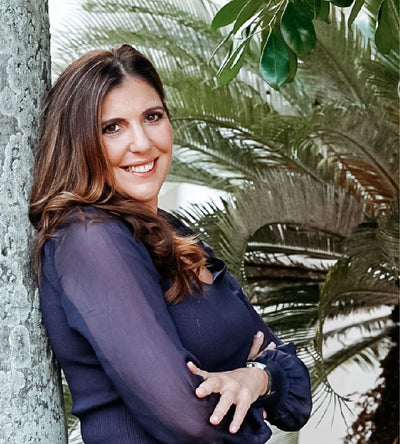
She was fifty-six years old when we recorded this conversation.
Biologically, her cells tested at forty-four.
That twelve-year gap did not exist before her breast cancer diagnosis. It exists because of what she chose to do after it.
Bettina Gordon Wayne spent over thirty years as an international journalist interviewing world leaders and billionaires. She was always the one asking the questions. Then life handed her a story she couldn’t cover from a distance. A first-time mom at forty-four. A breast cancer diagnosis four years later, on a beautiful spring morning in Washington DC when the cherry blossoms were out.
What she did next is what this conversation is about.
Eight years cancer-free. Biologically younger than she was before the diagnosis. And in possession of a framework for aging in reverse that does not require two million dollars a year, a team of biohackers, or a lab full of supplements.
Most of it is free. All of it is possible. And it starts with a mindset she calls healthy defiance.
Table of Contents
→ Chronological Age vs Biological Age: The Measurement That Actually Matters
→ The Cancer Diagnosis She Never Saw Coming
→ Healthy Defiance: The Mindset That Changes Everything
→ Later Motherhood, Fertility, and the Biology of Expectation
→ The Unsexy Truth About Longevity: It’s the Fundamentals
→ Become a Beauty Hunter: The Free Longevity Strategy Nobody Talks About
→ The Lab Markers Worth Tracking as You Age
→ Your Eighty-Year-Old Self Is Watching You Right Now
→ FAQ: Reversing Biological Age
Timestamps
[00:00] Introduction: the body as a cathedral that needs renovation and repair
[02:30] Bettina’s background: thirty years as an international journalist asking the questions
[04:00] Deciding to become a mother later in life — the mindset shift that made it possible
[07:30] Trying to conceive at forty, giving up, changing her mindset, and conceiving naturally at forty-three
[10:30] The case for later motherhood: why these women may actually be biologically younger
[13:00] Chronological age vs biological age: what each one actually measures
[15:30] Steve Horvath and the first biological age clock: epigenetic DNA methylation testing
[18:00] How to test your biological age today and what companies offer it
[20:30] Health is an inside game: why external interventions fail on a stressed, damaged cellular foundation
[23:00] The cherry blossom morning: receiving a breast cancer diagnosis she never saw coming
[26:00] Why a healthy lifestyle may have kept her cancer small and contained
[29:00] Everything you do today is setting up the next ten to twenty years of your body
[32:00] Step one in reversing biological age: healthy defiance — and pairing that mindset with intentional, joyful movement like the kind explored in movejoy
[35:30] Stop bemoaning what others can eat, drink, or do. Take the energy back.
[38:00] The racehorse metaphor: is this racehorse food or mule food?
[41:00] The unsexy truth: ninety percent of longevity is the fundamentals
[43:30] Sleep as the number one free anti-aging strategy
[46:00] Movement that brings joy instead of cortisol
[48:30] Become a beauty hunter: the parasympathetic reset hiding in plain sight
[51:00] The Harvard eighty-five year happiness study: community as a longevity lever
[53:30] Key lab markers to track: HbA1c, hsCRP, lipids, omega-3 ratios, organ stress markers
[57:00] What Bettina’s markers looked like at diagnosis vs one year after implementing these strategies
[60:00] Dr. Anna on oxytocin as the most longevity-producing hormone
[62:00] Leave the audience: two words. Watch me.
Chronological Age vs Biological Age: The Measurement That Actually Matters
Your birthday is not your biology.
Chronological age is the number on your birth certificate. It goes up by one every year regardless of what you do, what you eat, how you sleep, or how you live. It is fixed and unchangeable.
Biological age is the true age of your cells and tissues. It reflects how well your body is actually functioning relative to how it could be functioning. It can go up faster than your chronological age — or slower. It can, with the right interventions, go in reverse.
We have been able to see this difference our whole lives. Walk into a twenty-year high school reunion and you can spot it immediately: some people look exactly as they did in the yearbook. Others have aged at a rate that does not match the calendar. We could see it. We just could not measure it.
That changed in 2013, when scientist Steve Horvath developed the first quantifiable biological age clock — known as the Horvath clock. It measures epigenetic DNA methylation patterns to determine how old your cells actually are, as opposed to how old your birth certificate says you are.
Today, there are multiple companies offering biological age testing through blood draws or cheek swabs. It is not yet routine medical testing. It is not typically covered by insurance. But Bettina argues it should be the first number every woman knows — not the one on her birthday cake.
“The biological age is the true age of our cells and our tissues. It shows how well the body is functioning. In the past we could see it, but we couldn’t measure it. Today we can. And this is the measurement that matters, not the chronological age.”
When Bettina tested one year after her cancer diagnosis — after implementing the strategies in this conversation — she came in nearly a decade younger than her chronological age. Today that gap is twelve years.
The Cancer Diagnosis She Never Saw Coming
It was a beautiful spring morning in Washington DC. The cherry blossoms were out. Bettina went to pick up her mammogram results. She had not thought twice about it.
The doctor said the words. Invasive breast cancer.
Her response, by her own account, was to yell back: “But I don’t do cancer. I do health.”
She had been living what she considered a genuinely healthy lifestyle. Cooking at home eighty to ninety percent of the time. Prioritizing sleep. Spending time in nature. She had cleaned up her life significantly in the years after her son was born.
What she learned from her oncologist in the aftermath changed how she thought about the relationship between lifestyle and disease:
“Because of your lifestyle, the cancer never grew big. It never took all it could. It didn’t have a chance to take over the system.”
This is not a small point. Cancer cells do not appear overnight. They develop over years, sometimes decades. What you are doing today is either feeding that process or slowing it. A healthy lifestyle may not entirely prevent a diagnosis. But it shapes how that diagnosis arrives, how contained the disease is, and how the body responds to treatment.
Bettina’s framing is important: she does not call herself a cancer survivor. She does not say she is in remission. The cancer is gone. It is not a part of her identity. It is something that happened and that she chose to turn into a purpose.
“It is not what the life is that we have and the challenges that we have. They can break us, or they can define us. When we get up and we straighten out and start walking with the strength and the power of a life lived, experiences gathered, and wisdom distilled out of that — we are unstoppable.”
Healthy Defiance: The Mindset That Changes Everything
Bettina calls the first and most important step in reversing biological age healthy defiance. Not discipline. Not willpower. Not motivation.
Defiance.
Here is what she means: the dominant cultural narrative around aging is one of decline. Of being over the hill. Of settling. Of accepting that certain things are no longer possible past forty, fifty, sixty. That narrative is wrong. And the way to respond to a wrong narrative is not to comply with it more politely.
You push back.
“Stop bemoaning what others can eat, drink, or do. That takes a lot of time. That takes energy. And this is a waste of focus. Get on with it. Take agency over the way you age and everything can change. It starts with being a touch defiant.”
The practical application of healthy defiance looks like this: when someone tells you that you are too old to start a business, fall in love, or get outrageously healthy again — you look them in the eye and you say two words. Watch me.
It also looks like this: stop measuring yourself against the general population doing life differently. A woman who wants to conceive at forty-three cannot apply the fertility statistics designed for twenty-five-year-olds. A woman who wants to reverse her biological age cannot apply the expectations designed for people who are passive participants in their own aging process.
You are not in that group. Get off the comparison track entirely.
Later Motherhood, Fertility, and the Biology of Expectation
Bettina tried to conceive at forty and could not, for a year. She and her husband set it aside. The pressure came off. She began working on her mindset — shifting from a focus on what could go wrong to what could go right. She stopped measuring herself against a fertility clock designed for someone else.
At forty-three she decided, clearly and internally, that she did want to become a mother.
She conceived on the first try.
This is not presented as a miracle. It is presented as evidence that biological age — not chronological age — determines what the body can do. A woman who is forty-three chronologically but significantly younger biologically is not the same as a woman who is forty-three in both dimensions.
Bettina also notes what the research shows: women who have children after thirty-five have significantly higher odds of living past ninety. The biology of successful late fertility and the biology of longevity overlap in meaningful ways.
Dr. Anna adds the clinical parallel: premature ovarian insufficiency, early menopause, and fertility struggles at younger ages can often be understood through the lens of accelerated biological aging. Restoring hormonal health is, in part, a longevity strategy applied to the reproductive system.
“Most likely, these women who conceive later in life have a lower biological age than their chronological age would suggest. They are made to feel less capable, less fertile. But they will make the best mothers in the world because they are older, because they’re more mature, because they have more life experience. Stop judging by chronological age.”
The Unsexy Truth About Longevity: It’s the Fundamentals
Here is the thing Bettina says her clients always hope is not the answer: ninety percent of reversing biological age comes down to fundamentals that are not new, not expensive, and not particularly exciting.
Not the latest biohack. Not the red light mask. Not the stack of supplements.
The fundamentals. And the most powerful one is free.
1. Sleep
Brian Johnson — the man who spends two million dollars a year on aging reversal — and Bettina Gordon Wayne — who does not — agree on this completely: sleep is the number one anti-aging strategy available to any human being. It is also the one most consistently sacrificed in the name of productivity, hustle, and the myth that you can catch up on weekends.
You cannot. Sleep is when the body repairs, consolidates memory, clears metabolic waste from the brain, and resets hormonal rhythms. There is no intervention that compensates for its absence.
2. Nutrition
Bettina’s framework is simple and binary: food either slows aging or speeds it up. It either nourishes you or damages you. There is very little in between.
The racehorse test: before eating something, ask yourself — would I feed this to my racehorse? Would a serious racehorse owner, whose prized animal is their livelihood, give this to the horse? If not, it is mule food. And you are a racehorse.
Nobody needs to be told to eat more vegetables. The knowledge is not the problem. The reframe is: you are an active participant in aging slowly or rapidly with every choice you make. Every single day.
3. Movement That Brings Joy
The most overlooked word in exercise advice: joy.
If you go to the gym flooded with cortisol because you resent being there, you may be negating the physiological benefit of the workout with the stress hormones you are producing while doing it. Movement should be something you want to do. Dancing, walking, whatever brings your body pleasure. Do that. Do it often. Just do not sit.
4. Stress Reduction and Community
The Harvard Study of Adult Development — eighty-five years of data on what makes people live well and long — comes back to one answer more than any other: the quality of your relationships. The people who surround you, who love you, and who you love. Oxytocin is not just a feel-good hormone. Dr. Anna calls it the most longevity-producing hormone in the body. It is produced through connection, touch, laughter, nature, beauty, and love. And it is free.
Become a Beauty Hunter: The Free Longevity Strategy Nobody Talks About
Of all the strategies in this conversation, this one is the most original — and possibly the most immediately actionable.
Bettina calls it becoming a beauty hunter.
The idea: most of us move through our days in fight-or-flight mode. The sympathetic nervous system is activated. Cortisol is elevated. The body cannot repair in this state. Cellular aging accelerates.
The parasympathetic nervous system — the one that allows the body to rest, restore, and regenerate — is activated by safety, pleasure, and beauty. Not by grand gestures. By small, intentional moments.
A beautiful skirt. A flower. The light through a window. The smell of coffee. Whatever stops you and makes you think: that is beautiful.
When you intentionally seek beauty — multiple times a day, with actual attention — you are giving your nervous system permission to move out of threat mode. Cortisol drops. The parasympathetic system activates. The body begins to repair.
The practice: go through your day, specifically looking for beauty. Not waiting for it to arrive. Hunting for it. Set the intention before you leave the house. Find five things before noon. It takes no money, no equipment, no gym membership, and no extra time.
“These are the moments when your system goes from fight or flight — that so many of us are in the majority of our days — to the one that is actually regenerative. In fight or flight, the body cannot repair. You need to activate the parasympathetic nervous system. Become a beauty hunter.”
The Lab Markers Worth Tracking as You Age
Dr. Anna outlines the specific lab markers she uses to track and influence biological aging in her clinical practice. These are the numbers that move when lifestyle, hormones, and nutrition are optimized — and that predict how the next decade of your health unfolds.
Metabolic and Inflammatory Markers
Hemoglobin A1c (HbA1c) — three-month average blood sugar; one of the strongest predictors of metabolic aging
High-sensitivity C-reactive protein (hsCRP) — systemic inflammation marker; elevated hsCRP is associated with accelerated biological aging, cardiovascular disease, and cognitive decline
Fasting insulin — catches insulin resistance years before HbA1c becomes abnormal
Lipid and Fatty Acid Markers
- Full lipid panel including LDL particle size — small dense LDL is significantly more inflammatory than large fluffy LDL
- Omega-3 to omega-6 (arachidonic acid) ratio — reflects dietary fat quality and systemic inflammation; EPA:AA ratio is particularly important
Myeloperoxidase and lipid peroxidases — markers of oxidative stress
Organ Stress Markers
- NT-proBNP — cardiac stress marker; elevated levels indicate the heart is under strain even before symptoms appear
- KIM-1 — kidney injury marker; an early signal of renal stress
Liver function tests (AST, ALT, GGT) — liver health directly affects hormone metabolism, detoxification, and cellular aging
Hormonal and Vitality Markers
Vitamin D — Bettina had a level of 21 at diagnosis. Optimal is typically 60–80 ng/mL. Vitamin D is a hormone, not just a vitamin, and its deficiency is associated with cancer risk, immune dysfunction, depression, and accelerated aging.
Testosterone (free and total) — for muscle preservation, cognitive function, and energy in women
Thyroid panel (TSH, free T3, free T4) — as discussed in related episodes, the normal range is not the optimal range
Biological age testing — DNA methylation (Horvath clock or equivalent) or telomere length testing; not yet routine, typically self-pay, but provides the most direct view of cellular aging status
Your Eighty-Year-Old Self Is Watching You Right Now
One of the most powerful reframes in this conversation: your choices today are not just about how you feel tomorrow. They are in correspondence with your future self.
Bettina asks her clients to close their eyes and picture their eighty-year-old self. Not as a vague abstraction, but concretely. Is she in a nursing home? Is she vital and independent? Is she burdening her children, or laughing with them? What does her body feel like? What can she do?
Then make today’s choices in alignment with that woman.
This is not a guilt exercise. It is a direction-setting one. The eighty-year-old is not a warning. She is a destination. And every day, you are either taking a step toward her or a step away.
Dr. Anna adds the clinical weight to this: the aging demographic in America is one of the unhealthiest in the world, depending on zip code. The rate of nursing home dependency, cognitive decline, and medication burden is not a natural consequence of living a long time. It is a consequence of living a certain way. And that way can be changed, starting today, regardless of what has come before.
“Whatever you do today will make you feel good today, tomorrow. But it also sets you up for what happens in the next ten to twenty years to come. Wherever you are, if you clean up your life now, you have no idea how beneficial that could be in the long run.”
FAQ: Reversing Biological Age
Q: Can you actually reverse your biological age?
A: Yes — and this is now well-supported by the science of longevity. Biological age, measured through epigenetic DNA methylation testing, telomere length, or other biomarkers, reflects how well the body is actually functioning rather than how many years it has existed. Multiple studies and individual cases — including Bettina Gordon Wayne, who is twelve years biologically younger than her chronological age at fifty-six — demonstrate that lifestyle changes can meaningfully shift biological age in the right direction within months to years.
Q: What is biological age and how is it different from chronological age?
A: Chronological age is the number of years since you were born — fixed, unchangeable, determined by your birth certificate. Biological age is the true functional age of your cells and tissues. It reflects how well your body is maintaining, repairing, and regenerating itself. Two women who are both fifty years old chronologically may have biological ages of forty and sixty-two, respectively, depending on their lifestyle, stress levels, sleep quality, nutrition, and hormonal health.
Q: How do you test your biological age?
A: Biological age testing is available through several commercial companies using blood draws or cheek swabs. The most established method measures epigenetic DNA methylation patterns — originally developed by scientist Steve Horvath in 2013. Other companies use blood biomarker algorithms to estimate biological age. These tests are not yet routine in conventional medicine and are typically self-pay. Dr. Anna recommends combining biological age testing with standard lab markers including HbA1c, hsCRP, lipid panels, vitamin D, and organ stress markers for the most complete picture.
Q: What are the most effective strategies for reversing biological age?
A: According to Bettina Gordon Wayne and Dr. Anna Cabeca, ninety percent of biological age reversal comes from fundamentals rather than advanced biohacking: (1) Sleep — the single most powerful free anti-aging intervention available. (2) Nutrition — food that nourishes rather than damages; the racehorse test (would you feed this to your prized racehorse?) is a useful daily filter. (3) Joyful movement — cortisol-generating exercise may negate its own benefits; movement should feel good. (4) Stress reduction and community — the Harvard Study of Adult Development identified relationship quality as the most consistent predictor of healthy longevity. (5) Beauty hunting — intentionally seeking beauty multiple times daily to activate the parasympathetic nervous system and shift the body into repair mode.
Q: Can a healthy lifestyle prevent breast cancer?
A: A healthy lifestyle does not guarantee cancer prevention. But Bettina Gordon Wayne’s oncologist told her directly that because of her lifestyle, her cancer never grew large or invaded aggressively — it did not have the inflammatory, metabolic environment it needed to thrive. Research consistently shows that chronic inflammation, poor metabolic health, and hormonal imbalance create conditions that allow cancer cells to proliferate. Reducing these factors through lifestyle does not eliminate risk entirely, but meaningfully reduces the severity and progression of disease when it occurs.
Q: What is the racehorse test for food?
A: The racehorse test is a mindset tool developed by Bettina Gordon Wayne for making food decisions. Before eating anything, ask: would a serious racehorse owner feed this to their prized horse? Racehorse owners do not compromise on what they feed their highest-performing animals. If the answer is no — if the food is what Bettina calls “mule food” rather than racehorse food — it is a signal that the food is damaging rather than nourishing. The framing shifts the question from “is this healthy?” to “what do I want and am I choosing accordingly?”
Q: What is the Beauty Hunter strategy for longevity?
A: The beauty hunter strategy is a daily practice developed by Bettina Gordon Wayne based on the understanding that most people spend the majority of their day in sympathetic nervous system activation (fight or flight), a state in which the body cannot repair or regenerate. Intentionally and repeatedly seeking beauty — a flower, a view, a piece of music, anything that stops you and registers as beautiful — activates the parasympathetic nervous system, drops cortisol, and creates brief but cumulative windows of cellular repair. The practice requires no money and no extra time. It requires intention.
Q: Is it possible to have children naturally after forty?
A: Yes, and it is more common than commonly reported. Bettina Gordon Wayne conceived naturally on her first attempt at forty-three after being unable to conceive at forty. She attributes part of this shift to a change in mindset — moving from anxiety about what could go wrong to openness about what could go right. She also notes that women who conceive naturally later in life may have a lower biological age than their chronological age suggests. Research shows that having a child after age thirty-five is associated with significantly higher odds of living past ninety, suggesting biological overlap between late fertility and longevity.
Resources Mentioned
- Bettina's free biological age quiz
- Bettina’s book: The Joy of Later Motherhood
- The Harvard Study of Adult Development — eighty-five years of data on happiness and longevity
- Steve Horvath — developer of the first epigenetic biological age clock (Horvath clock), 2013
- The Vitality Experience — Dr. Anna’s live event, Dallas, TX, September 19–20, 2026. Register at dranna.com
Note: For women interested in biological age testing, Dr. Anna recommends pairing commercial testing with a full lab panel including HbA1c, hsCRP, vitamin D, lipids, and hormonal markers for the most actionable picture.